PC
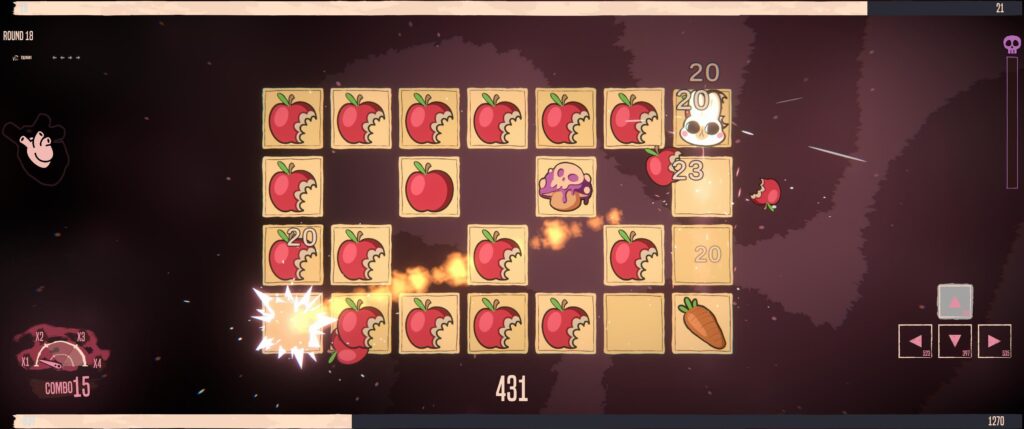
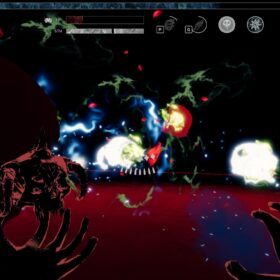
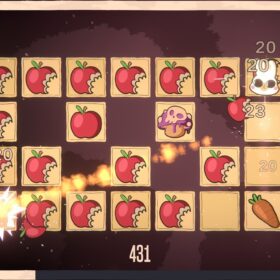
My cursor keys are weeping. They’ve taken such a hammering over the last week, as I’ve blasted my way through splendid little arcade game Kaz (from Kalinarm, the team that brought us the incredible Linkito). The deceptively simple-sounding concept of moving a character around a small field of tiles with your cursors (or WASD) to hit monsters and avoid traps unfurls into an incredibly tactical sprawl of dozens of characters, special moves, upgrades and even cursor-cast spells. The frenetic action is always about chasing a high score, while hitting goals to unlock coins to buy yet more ways to play. And every aspect of this is gorgeously, explosively presented with so much variety in art, sound and music.
Things of course begin reasonably simply. You have one character, Kaz herself, and a grid of four tiles in which to rapidly fling yourself around. Enemies appear in three different forms – regular, shielded, and fugitives – and are “attacked” by moving into their tile. Regular and fugitive enemies are beaten by simply moving over, while shielded enemies require an extra tap first. And at first, that’s really it.
Each level starts at 15 seconds long and has a required minimum score in order to proceed to the next. Miss a target and it’s game over, but hopefully you’ll have unlocked some new gubbins in the process. Get far enough in and traps will start to appear, their imminent spawn indicated by a red X, and if touched while briefly appearing will apply curse to your character. After each level, you get to choose from either one of three upgrades, or if you’ve filled your curse meter, one of three debuffs. There are 108 of these total to unlock, with enormous variety in the changes they make.
You might get Spawn Swarm, which fills every tile in the ever-larger grids with enemies at a random point in the round, offering a great chance to scoop up a big score. If you then pick Inflation, that makes each enemy worth more points, so those two combine extremely well. Or you might want Starchaser that makes a star appear on a tile for a very brief window that if grabbed hands you a big pile of points. But Golden Shield makes the massive difference of giving you points when breaking a shield as well as hitting the enemy underneath. Perhaps you’ll want Mole, which adds an extra tile to your grid with the first wall you bash. Oh, and possibly the most important: Jump. This gives you the ability to skip gaps between tiles and hugely frees up your movement. And on and on and on. Combining these in specific ways eventually leads to an incredibly tactical approach.
Then there are the spell cards, which trigger a spell if you hit four cursor keys in the correct pattern, and can give you horizontally enemy-clearing wave powers, add extra time to your run, fill the grid with enemies, and so on. Executing these is a whole other level of complexity as your fingers dance over the keys in a frantic attempt to avoid traps, grab stars, and still somehow hit the combo.
On the other hand, you have the debuffs, replacing an upgrade pick when you’ve accidentally picked up enough curses. These aren’t all horrendous, and some can even be helpful, and getting to pick between three means you’re always picking least-worst. The least offensive will have fugitives spawn or move more, but that’s rarely a big deal, and those that give more enemies shields can be a positive boon when that scores you more points. But there’s also horror like getting randomly teleported, Doubt that reduces you upgrade choices, or the truly evil Dangerous Walls that means tapping the edges stuns you.
It’s just so much fun experimenting with different combinations of these, and then even more so as you unlock other characters.
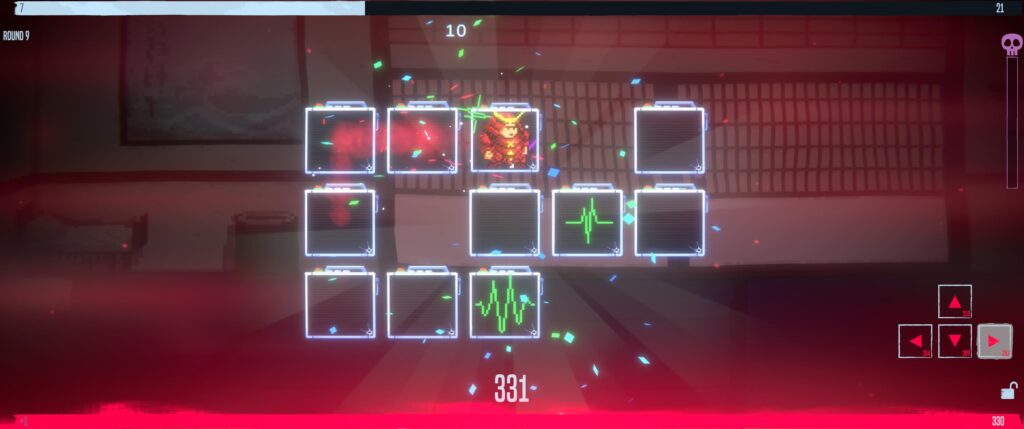
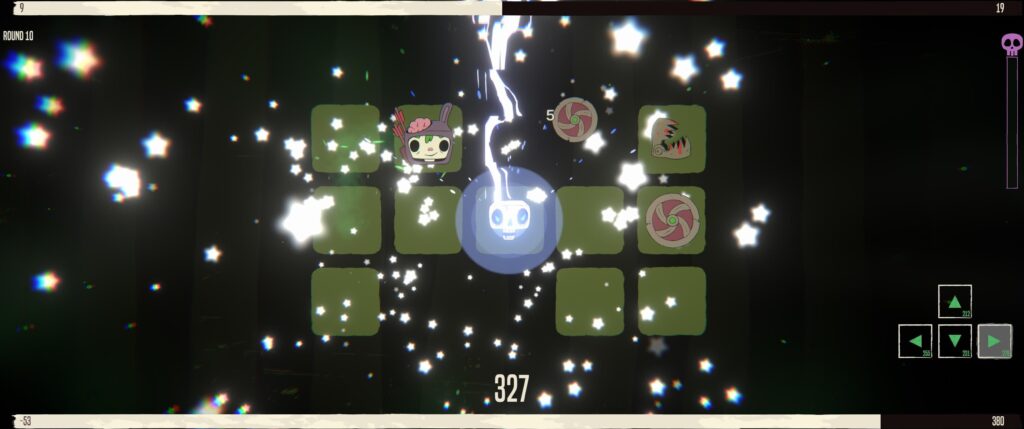
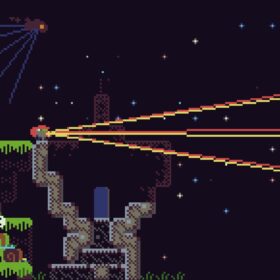
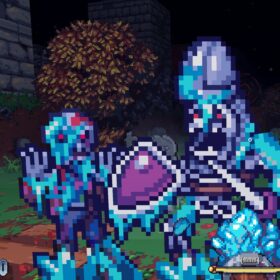
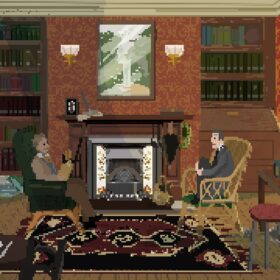
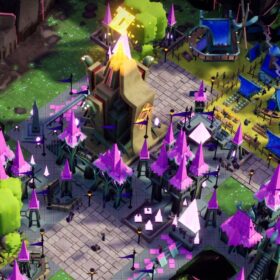
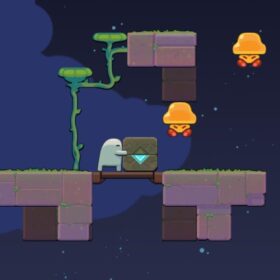
There are 25 characters in total, unlocked by spending coins you gain by completing the approximately nine hundred billion quests, and each not only has its own unique buff, but also has a completely unique art style for the grid and enemies, and even its own soundtrack. Starter Kaz has a big explosion when a round’s nearly over, which is useful. But weird zombie rabbit-thing Zek triggers lightning halfway through each level. Frog-creature Aku reduces the cooldown on spellcasting, while Bunny Bento adds a whole combo multiplier system to the game! Tako Me Home turns the game into 8bit art and lets you dig an extra cell at the start of each round, while Rhythm Doctor (from the 7th Beat Games game) has everything turn into waveforms attacked by a pixel ninja.
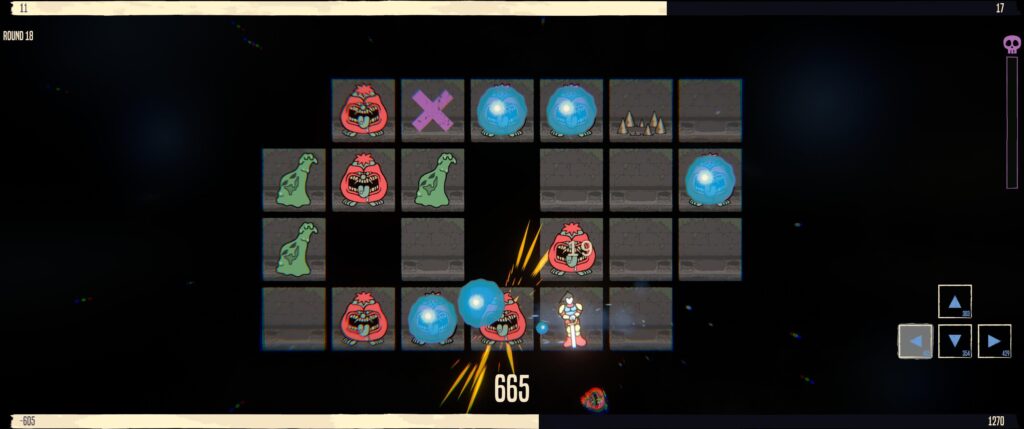
Most importantly, Kaz is compellingly fun. You quickly discover dexterity you didn’t know you had, especially when trying to fling yourself around levels without hitting the sides (for various upgrade reasons). The entire time I’ve played I’ve found myself in the midpoint of extraordinary skill and just hammering the buttons like a child (or me) playing Mortal Kombat. There are always quests you’ve nearly completed, giving you a reason for just one more go, and that’s even more tempting when you can pick from one of the many characters you’ve unlocked to keep adding variety.
It’s super-impressive, deceptively complex, and immediately fun.
- Kalinarm / HAKURO
- Steam
- £6/$7/7€
- Official site
All Buried Treasure articles are funded by Patreon backers. If you want to see more reviews of great indie games, please consider backing this project.
86










Really enjoyed this review of Kaz, especially the breakdown of what makes the combat feel distinct. I run HahaGames (hahagames.com), a free browser-games site, and reviews like this are great for finding indie titles worth spotlighting. Thanks for the writeup.
You have completely sold me on Kaz. Twenty-five characters, 108 upgrades and “just one more go” is precisely the overlooked thing this site exists to dig up. It also left me curious how readers here would answer the big one: which roguelike actually takes the top slot?
No strings attached, a vote on exactly that: https://youpick.best/ranking/what-is-the-best-roguelike-game-of-all-time. Dropped into a post it becomes a small widget, offering two games, taking one tap, moving the order as readers pick. Nobody signs up and nobody leaves the page. The steps are at https://youpick.best/add-rankings-to-your-site and come to a couple of minutes.
Behind it is me on my own time, free, with nothing for sale.
Have a play and tell me whether it stands up, Kaz’s genre included. If none of it appeals, saying so is genuinely fine.