
PC, Mac
I’m in a quandary. I update Buried Treasure far more infrequently than I intend, thanks to so many potential games falling through, an endless supply of crises, and poor time management. But there’s a game I’ve sunk so many hours into with the absolute certainty I was going to write about it – it’s so damned good after all! – but as I did some research while writing the review I’ve discovered more about the true story this Lovecraftian-like horror is based on, and I just don’t know what to do about it.
So I’ve chosen this option: If topics like real-world murder and child abuse are those you would always wish to avoid, then close this down now. You wouldn’t want to play the game anyway. If not, and here’s the nuance, this specific game – while very dark and sometimes upsetting – is not accurately depicting real-world events but rather basing a story of cosmic horror upon them. I played it without knowing about any of the historical events, and (with some caveats) thought it was genuinely excellent. You can too. But I also can’t in good conscience not raise it. That’s my plan.
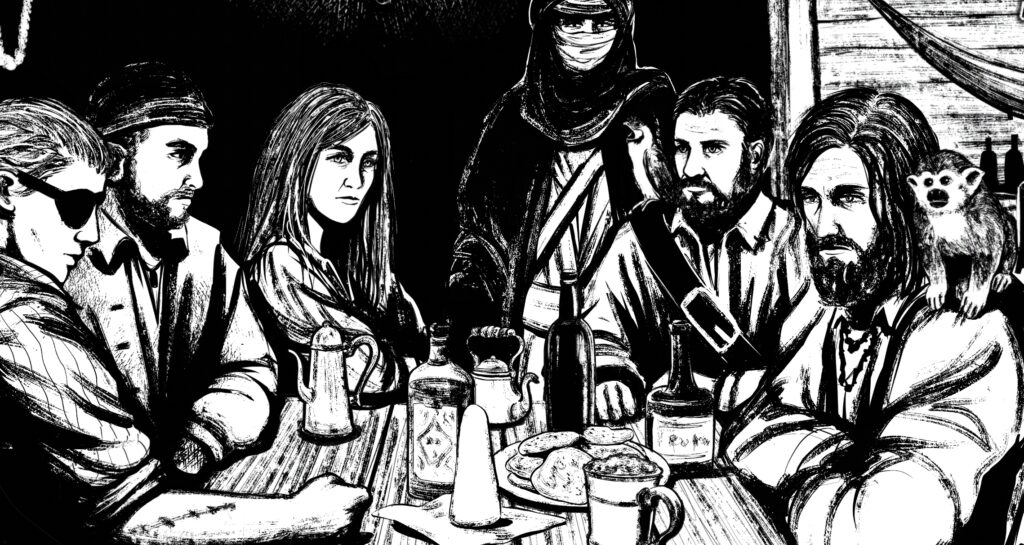
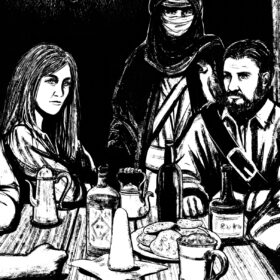
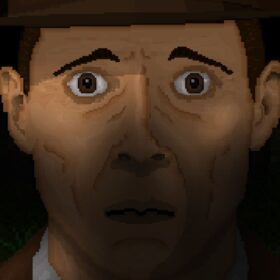
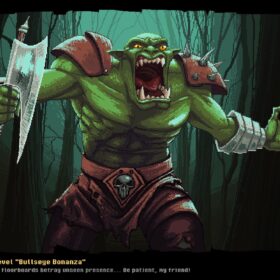
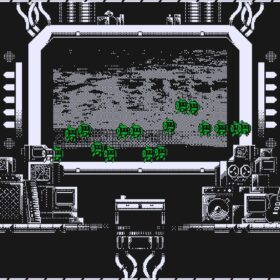
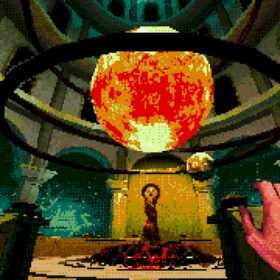
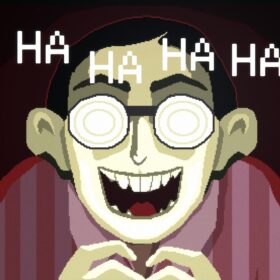
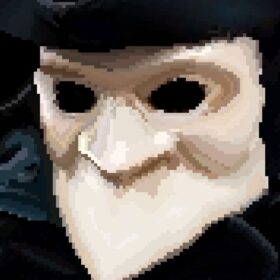
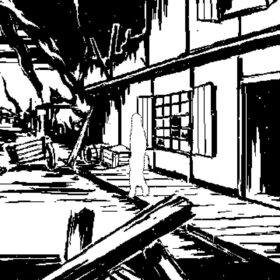
It’s New York, it’s 1927, and bereaved investigative journalist Richard Pickman is following leads on a story about stolen auto-parts, when he stumbles upon the location of a missing child. There, he sees the child’s dead body attacked by some sort of monstrous creature, and immediately becomes drawn into an awful world behind reality’s veil, in true Lovecraftian style. A combination of choice-driven text adventure and light point-and-click elements, illustrated with stunning art, makes for an excellent medium for conveying the creeping sense of awful that surrounds Pickman after he becomes embroiled in the the murder of Billy Gaffney.
On top of some really fantastic writing (made even more impressive considering this is created by an Italian team), and the 900 pieces of (often very gruesome) hand-drawn art, Omen Exitio Hunger also features some of the most extraordinary sound effects I’ve ever heard. Given that they play as blocks of text appear, rather than accompanied by graphics, it’s incredible how effective and evocative they are, often causing me to squirm in disgust or properly feel the atmosphere of a moment.
You also have, at least in the early parts of the game, some incredibly significant choices to make. Decisions that really do affect how you experience the story, the insight you gain into the eldritch mysteries, and the people you get to know properly. This is certainly something that occurs more infrequently the farther you get, with binary choices often replaced by just clicking through all the available locations and characters, and that’s definitely a shame, but it’s also a huge ask.
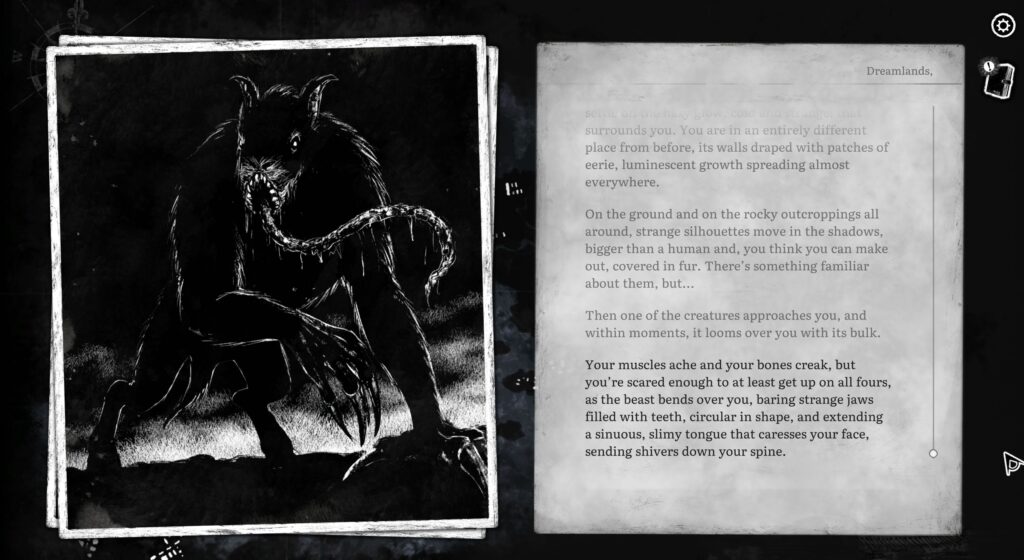
The other issue that occurs later on is one that besets Lovecraft’s own stories and many of the derivative works: the Dreamlands. Like too often, once Pickman ends up here – as good as the writing, art and sound remain – it’s harder to feel like it matters. It’s only superficially real, and when time and encounters don’t really contain any meaning, I just want it over and to be back into the concrete concrete city. I had the same problem with the extremely good Malevolent podcast, but perhaps other people have very different tolerance for such things.
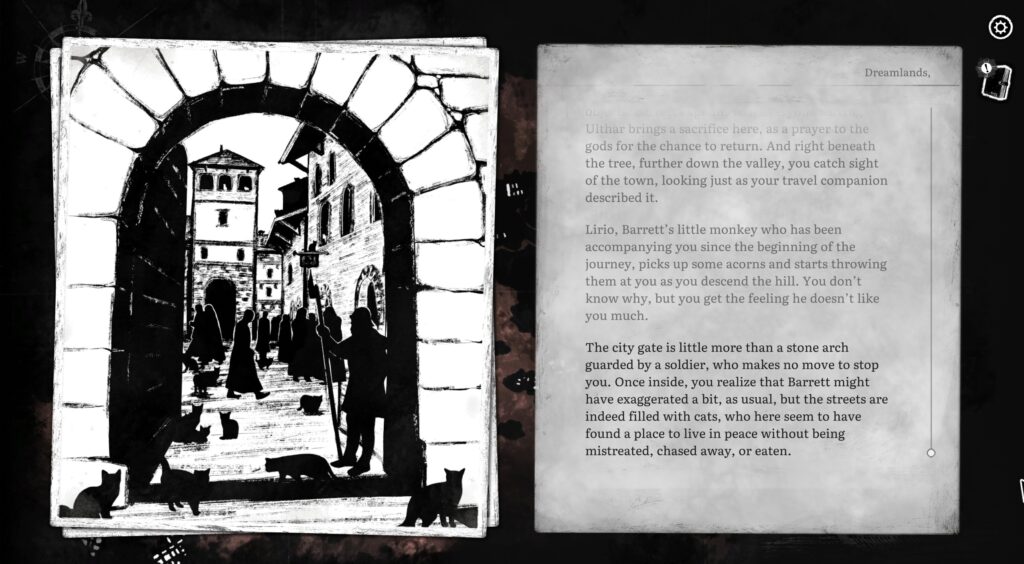
So yes, this a very dark game. Omen Exitio Hunger (OEH) is not only themed around the grisly murder of a child, but in a move I definitely find very uncomfortable, names that child the same as a real missing four-year-old who disappeared in 1927. That’s because the story is loosely based around the true story of Albert Fish, a truly horrific serial killer, paedophile and cannibal who became so legendary as to gain multiple nicknames like The Gray Man, The Werewolf of Wysteria, the Brooklyn Vampire, and as is used in OEH, The Boogey Man. I had originally linked the Wikipedia page about him, but after having felt genuinely ill from reading it, I’m deliberately adding an extra step between you and doing the same.
OEH fictionalizes absolutely everything else surrounding the story, including the true nature of Fish (who has an entirely different name here), so I just cannot fathom why it would leave William Gaffney’s name and death the same. It seems such a deeply horrible choice, because he was a real four-year-old, and he disappeared in the same circumstances, wearing the same clothes, and killed in the same truly horrific way. (Again, I want to make clear, I wish I’d never read about it.) It’s upsetting enough to read in the game, but to learn it was a real event just seems too far to me.
So what do I do with that? Did I find this game repellent as a result? Well, no, not as I played it. Have I thus cursed this game to being repellent for everyone else by writing this? I could hardly not mention it, and the game’s store page goes to lengths to establish its true inspiration. So should I have not written about it at all? But it’s a truly superb game. And here’s the other thing: you’re an adult who can make their own choices.
I very much love the idea of games that find unexplained mysteries from the past and then overlay them with fantastical explanations. There are so many options for doing this, and viewed purely with macabre fascination, Albert Fish would seem to fit the bill. He was truly one of the most inexplicably horrendous and fundamentally broken human beings I’ve ever read about, and his being the incarnation of some cosmic evil would make a lot of sense. But the kid? I didn’t need the same kid. I wish I’d never found out.
So do with this what you will. Genuinely, I would love to see what developers Tiny Bull Studios do next, given the astonishing talent on display here. They’re the team behind Don’t Nod’s The Lonesome Guild, after all. This is their second game in this series, the first – Omen Exitio: Plague – is similar but with more RPG elements, is historically rooted but seemingly entirely fictional. Personally, I’d love it if their third were too.
All Buried Treasure articles are funded by Patreon backers. If you want to see more reviews of great indie games, please consider backing this project.







I actually gasped a little when I read the victim’s name here, having recognized it immediately; like you, the details of the case in question here absolutely wrecked me when I first learned about it. (I was 14 at the time, which…didn’t help.)
What makes the name choice extra tasteless to me is that the premise, of Albert Fish as a conduit for/harbinger of cosmic evil, isn’t a particularly novel one: it was a major plot point in Stephen King and Peter Straub’s Black House 25 years ago, and even then they didn’t portray his real-life atrocities as having a supernatural cause. The concept there was basically that his acts of human evil brought him to the attention of a cosmic evil, which then made use of him for its own (very fictional) purposes.
Like you said, just reading about Fish’s crimes makes you almost reflexively reach for the supernatural as an explanation, because you barely want to consider such things are possible for human reasons. I don’t fault the developers one bit for being drawn to a similar premise as a horror novel that’s a quarter-century old, but it makes it harder to buy any excuse other than straight laziness for failing to change the victim’s name. King and Straub were careful to keep the real horrors separate from the pretend ones, and I absolutely can’t fathom why they wouldn’t take the care to do that here.
>I very much love the idea of games that find unexplained mysteries from the past and then overlay them with fantastical explanations.
Not a game, but perhaps you would enjoy the novel Declare by Tim Powers. Quite a lot of Powers’s fiction follows this formula, but Declare is the most fantastic (in more ways than one) example I can possibly think of. Reading the Afterword of that one truly blew my mind.