
PC, Mac, Linux
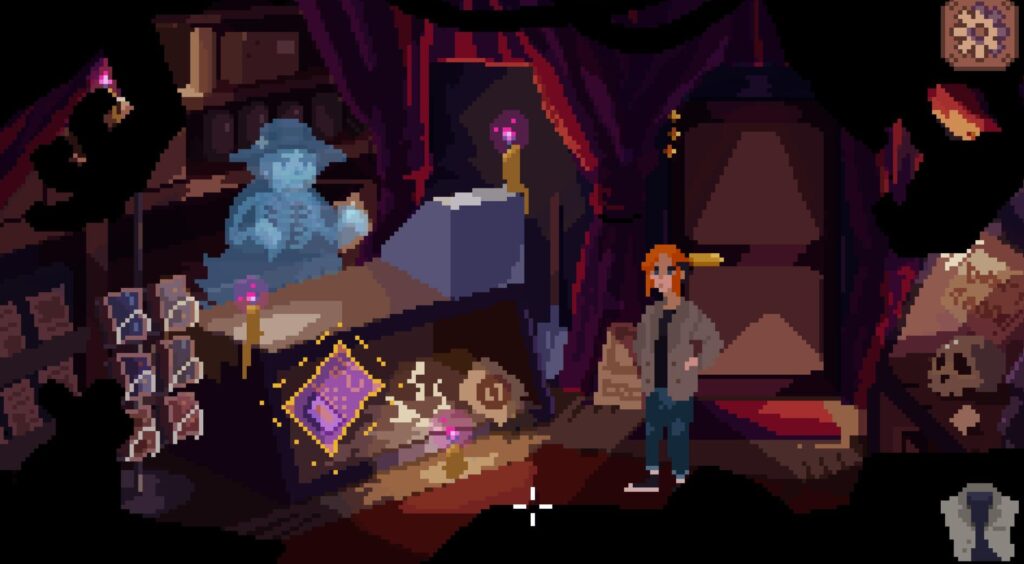
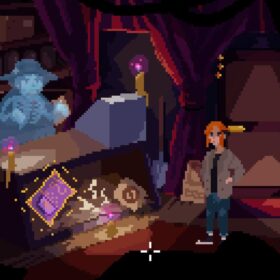
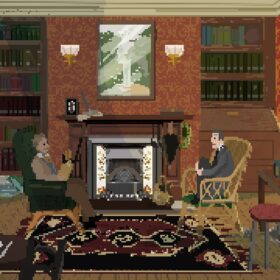
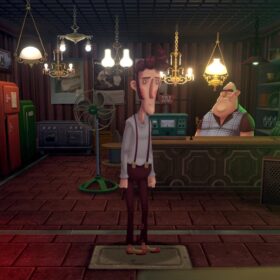
At first glance you’d assume that Uncle Lee’s Cookbook is a fairly traditional point-and-click adventure. Aesthetically it’s clearly designed to look a lot like early-’90s LucasArts, and mechanically you play it with a mouse cursor, inventory and so on. But this five-chapter game is very subtly something else. It’s–well four fifths of it at least–more of a puzzle game played as a PnC adventure. And that’s something that works splendidly well. (The other fifth? That is a traditional adventure game!)
Uncle Lee is, but for the prologue, not the player character. Instead that’s Ines, his niece whom he raised, whose life seems to be mostly made up of fixing the reality-breaking mistakes her maverick scientist uncle continuously makes. This means for four out of the five chapters in Uncle Lee’s Cookbook, you’re in these fantastic little vignettes, almost like bottle-episode adventures in which you need to manipulate whichever aspect of the laws of physics Lee has broken in order to put things as close to right as is available.
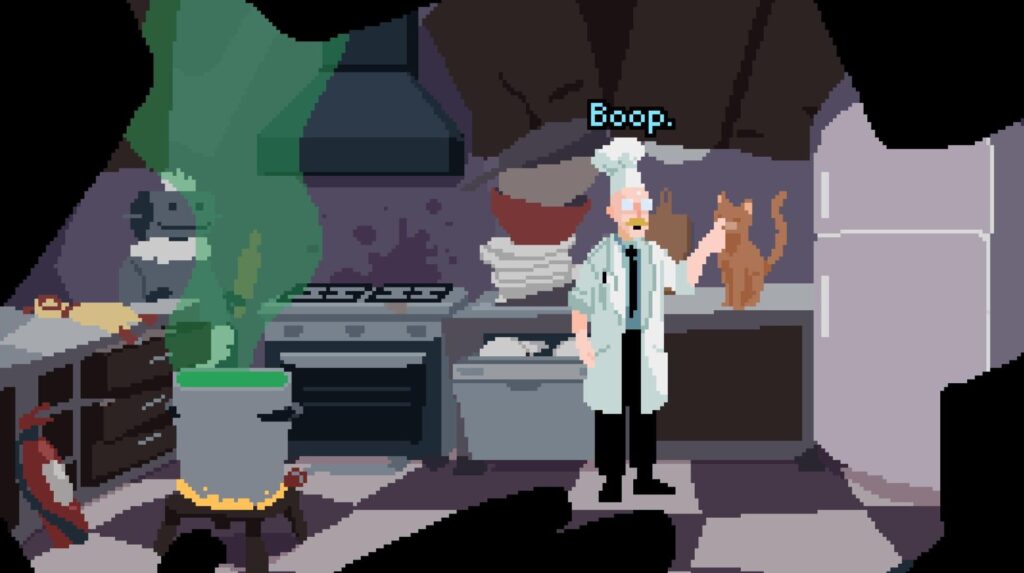
In the first chapter, for instance, Uncle Lee wants some ice cream from the massive 3D printer he’s installed in (the adult) Ines’ bedroom. However, he’s also fractured reality at a quantum level such that all is in quantum flux until he personally observes it. This means that every choice Ines makes from her perspective is unmade from Lee’s, and as such when he looks at you those quantum positions collapse into the least helpful form. In other words, if you go into the next room and pick up a baseball, on walking into the kitchen Lee’s glance means you now didn’t. Except, the issue is to fix this you need to bring him three specific items, each of which is frustrated by a puzzle before you can find it. And if he sees you, you didn’t actually do any of that.
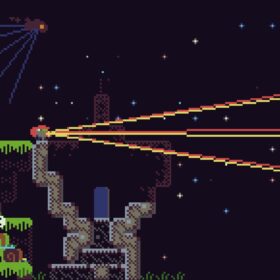
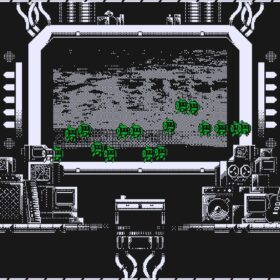
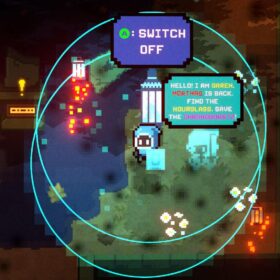
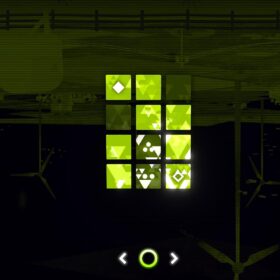
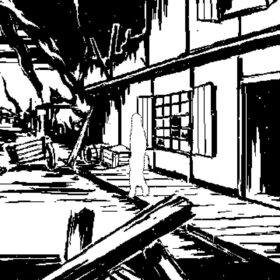
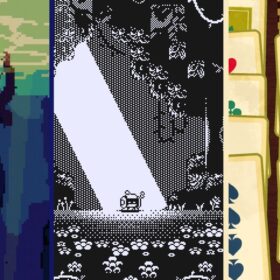
The second chapter jumps into the past, rendered in GameBoy green, and Uncle Lee has both accidentally turned himself into an electric eel and rendered the reality of your home into a Moebius strip. In the third you’re time travelling entirely within the confines of a single campervan. And in the fifth it’s about literally rewriting the rules of reality with a magic book. And the fourth? That’s a completely separate, almost Lee-free story about Ines trying to rid a small town of its ghosts so she can have piece and quiet in Lee’s childhood home to write a book, with multiple locations, characters, puzzles and a suite of magic powers!
The whole thing lasts three or four hours total, and is absolutely packed with incredibly smart ideas and very rewarding puzzles. There’s also a meticulous in-game hint system from a peculiar collection of hooded figures, and a lots of gentle knowing gags. In the main I’m strongly against Monkey Island references and fourth-wall breaking references to being a game in point-and-click adventures, due to how ubiquitous and self-aggrandising they so often are. But not so here–they’re sweet, and one recurring joke where characters inform you “there’s no gold in this game” got a chuckle out of me. Maybe I’m getting soft.
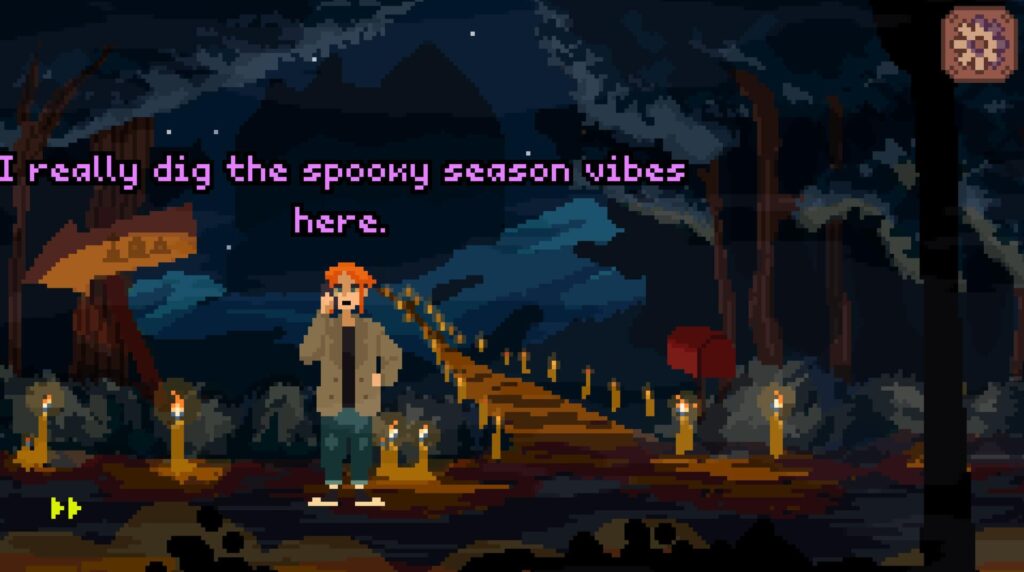
It’s superbly drawn and animated, and quite extraordinarily in a self-made engine from one of the three developers behind the game. (I’m really interested to know the decision behind that instead of going with Adventure Game Studio.) It’s also fully voiced, with the fantastic Maganda Marie as Ines, Nicholas Camm as Uncle Lee, and the beloved Sally Beaumont in a bunch of roles.
I had a lovely time with this especially interesting approach to the genre. Had it just been chapter 4 alone as a short adventure I’d have still been recommending this, but that it has the other four excellent conceits around it makes it into something novel and delightful.
- Relatively Painless Games / Dionous Games
- Steam
- £8/$10/€10
- Official Site
All Buried Treasure articles are funded by Patreon backers. If you want to see more reviews of great indie games, please consider backing this project.
81















It looks awesome ! I’m so glad you’re back here !
… since RPS has been hollowed out by IGN, you’re one of the last source of gaming coverage i’m still reading.