
PC
One of my favourite things to do is to use American bank holidays to take advantage of the huge audience at Kotaku when there’s no one else around to stop me. For five years I’ve been asking indie developers to email me with details about games that have just released and not gotten enough attention, or are releasing soon and need some wishlisting, then posting as many of them as I can to the front page of the site. This year, for what has feebly become known as Thanksgaming, one of the 40 games I randomly picked from the hundreds that are submitted each time was called The Amateur Deity Society.
Usually I stick to recent releases and forthcoming games, but after I watched the trailer for TADS – released in November 2024 – and then noticed that it had somehow only had 10 Steam reviews, I felt compelled to include it. And install it. And eventually play it. I’m so glad I did! This solo-developed game is an incredibly original approach to interactive fiction, delivering the sensibilities of a point-and-click adventure almost entirely in text. It’s also a superb short story, as the best IF so often is, told in a fascinating way.
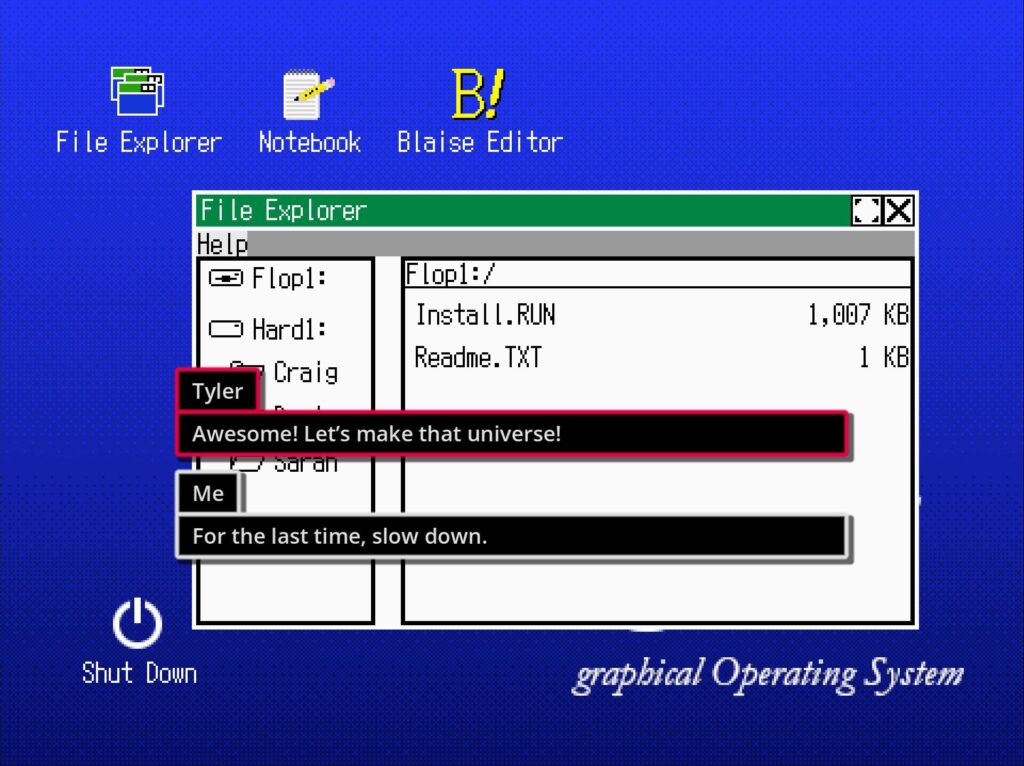
The game begins with you playing as Denise, a mid-90s high school student who is the founding member of the school computer club. Along with her friends Craig and Sarah, and the impossible to dissuade company of one Tyler, the four begin trying to program a primitive life sim on the extremely limited hardware of the school’s least worst computer. How this becomes a game involving wizards, hacking arcade machines and time travel is for you to discover for yourself. But be assured it’s a compelling story, amiably told.
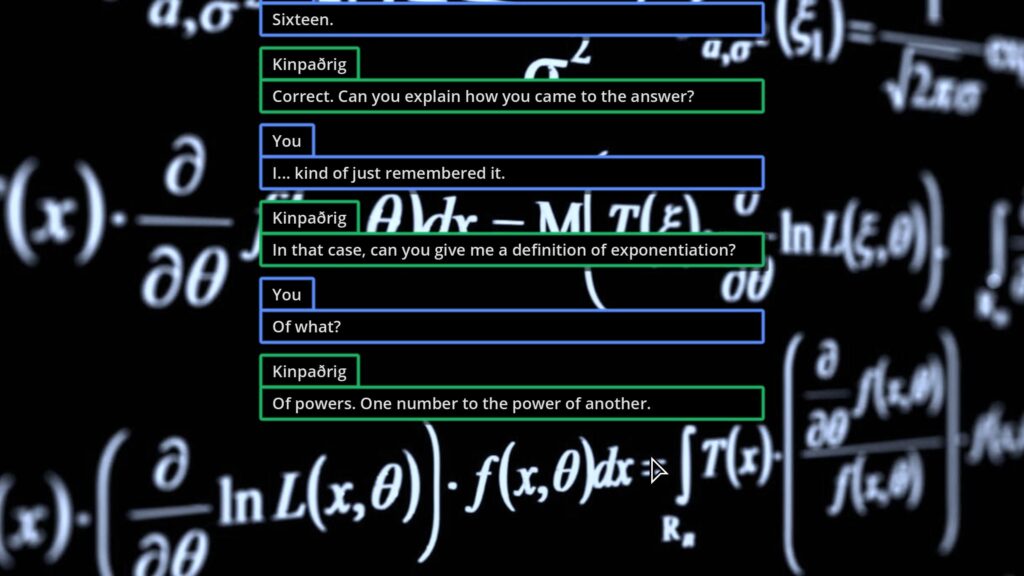
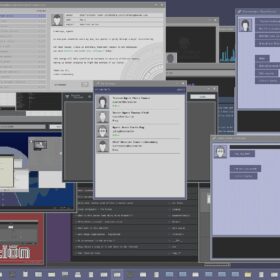
What we can discuss openly is how cleverly this is all put together. You interact with the game by clicking on highlighted words within the text, then choosing from the options that pop up, much like you’d click on an interactive piece of art in a point-n-click adventure, and choose how you’d interact. So Sarah’s behind the school – do you look at her to try to guess her mood, or talk to her despite it? If you talk, do you ask her to join in with your computer programming project, or broach the difficult subject of how Tyler’s involved and no one can get rid of him?
At the same time, you have a sort of inventory, a list of words down the right of the screen of things you’re carrying, which have their own pop-up text that’s contextual based on where you are and who is with you. I’m not the connoisseur of interactive fiction that I wish I were, but I’ve not seen a game do anything like this before, and it’s superb.
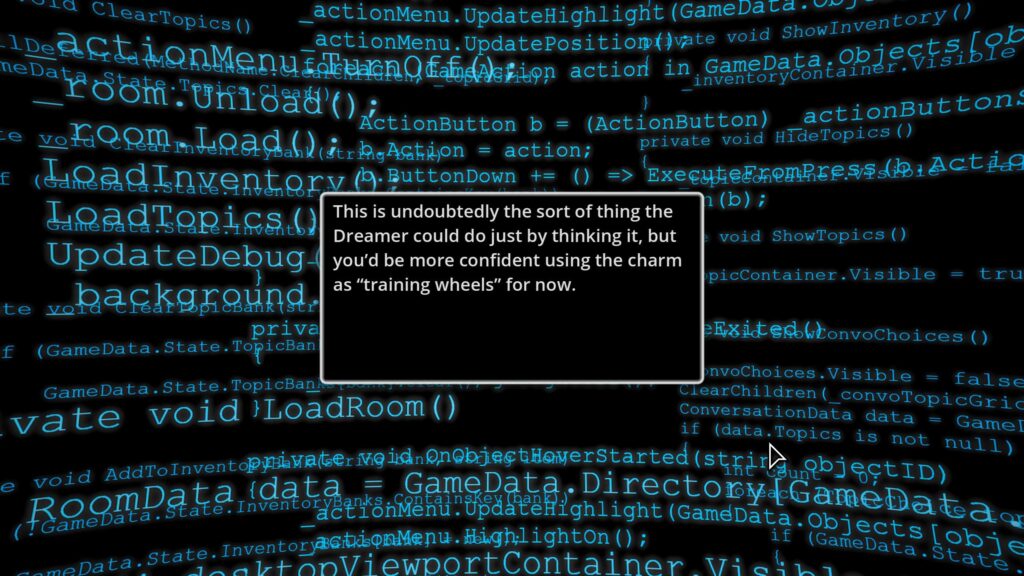
I described the story as “amiably told” above, which is perhaps a gentle way of saying that TADS stops short of being literary. It’s very light on descriptive text, instead opting for a more perfunctory (and perhaps traditionally) barebones establishing of any location, and dialogue is similarly stark and direct. However, while you won’t be blown away by its prose, it still successfully evokes the scenes and delivers the tale without any distracting errors. It also means it delivers the game’s frequent dream sequences in a matter-of-fact way that so pleasingly contrasts with the fantastical nature of the events.
I only have one gripe with the story, although I can’t really share it here, given so much that feels unexplained as you play is so satisfyingly (and cleverly!) resolved by the end. There’s something that isn’t (or perhaps I missed it?), that feels like it needed an interesting explanation, and I feel a little left hanging. However, the other aspects are revealed in such a way that you’ll, “Aha!” your way through the ending.
There’s also something very H.G. Wells and Jules Verne about the way it leaps from the mundanity of recognisable real life to the utterly fantastical without waiting for you to catch up, which I really enjoyed. I feel like this could have been a story published in a ’60s science fiction magazine, were it not for the retrospective view of the 1990s!
The Amateur Deity Society is a splendid thing, combining interactive fiction with point-n-click in such an inventive and successful way. I don’t know developer Robert Carlson’s plans, but if there were a way to make this Godot-based game an engine others could use to script their own adventures, it could lead to something extraordinary. In the meantime, I really do recommend grabbing this for a fun short story told in an intriguing way.
- Robert Carlson
- Steam
- £4/$5/€5
All Buried Treasure articles are funded by Patreon backers. If you want to see more reviews of great indie games, please consider backing this project.
78











Loved this game, got it in one of those itch.io game bundles. glad it got some recognition.